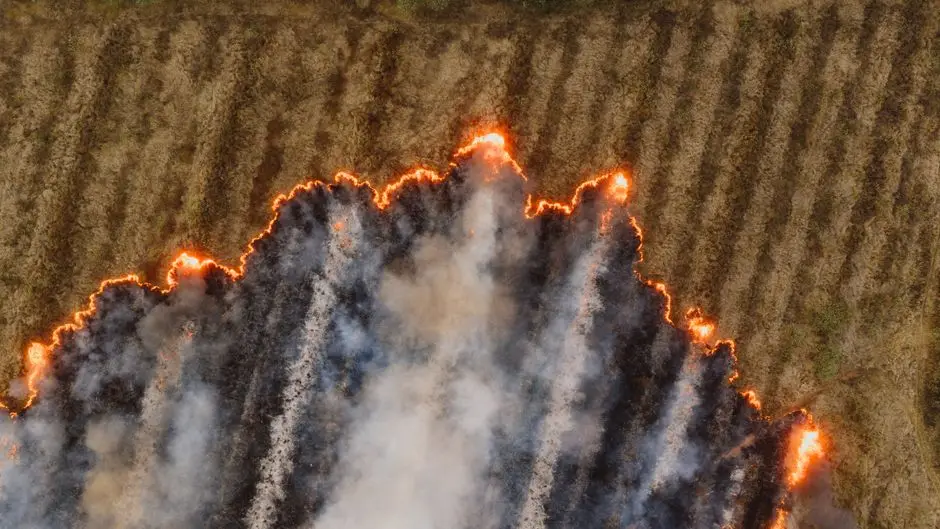
Preparing your Port Hueneme CBC Base home for wildfire season comes down to three things: clearing defensible space in the first 100 feet, hardening the exterior against embers, and staging an evacuation plan you can execute in under five minutes. Everything else is detail. Wildfire season preparation in Port Hueneme CBC Base, California runs from late spring through fall, but the work that actually protects your house happens in the cooler months - which is right now.
Below is the same checklist we walk homeowners through after a close call, organized so you can start this weekend and finish before the next red flag warning.
When is wildfire season in Port Hueneme CBC Base, California?
Wildfire season in Port Hueneme CBC Base, California peaks from June through October, with the highest risk in September and October when Santa Ana winds push dry air toward the coast. That said, the Thomas Fire started in December 2017, and the Woolsey Fire burned into November 2018 - so treat "season" as a guideline, not a guarantee.
What makes this area different from inland Ventura County is the marine layer. Morning humidity off the Pacific keeps fine fuels like grass and ornamental shrubs damp longer, which slows ignition. But the same ocean breeze that helps you in July turns into a liability in October, when offshore flow strips that moisture out in a single afternoon. We've watched lawns go from green to tinder in 48 hours.
Two local factors raise your risk more than most homeowners realize:
- Military housing density. On and around Naval Base Ventura County - Port Hueneme, homes sit close together. A fire that starts on one roof reaches the next in minutes, not hours.
- Aging vegetation. Eucalyptus, juniper, and old palm skirts are common in neighborhoods like Hueneme Village and along the Bard Road Corridor. All three are ember magnets.
If you want to know what a real fire looks like inside a home before it reaches the walls, our team writes about smoke remediation PORT HUENEME CBC BASE California - the damage usually starts long before flames arrive.
What is defensible space, and how much do you actually need?
Defensible space in Port Hueneme CBC Base, California is the buffer you maintain between your house and the vegetation around it, divided into three zones that each serve a different purpose. California law (PRC 4291) requires 100 feet of defensible space for most properties, and Cal Fire inspections in high-risk zones now check all three zones, not just the first.
Zone 0: 0-5 feet from the structure
This is the ember-resistant zone, and it's where most homes fail inspection. Nothing combustible should touch the house. That means no wood mulch against the foundation, no firewood stacked on the porch, no shrubs under windows, and no bamboo or juniper within five feet of a wall. Replace bark mulch with gravel or crushed rock. Move the recycling bins and the propane tank.
Zone 1: 5-30 feet
Keep grass mowed to 4 inches or less. Remove dead branches, leaf litter, and anything under the deck. Space shrubs at least 10 feet apart and keep tree canopies 10 feet from the roofline. If you have a wood fence attached to the house, the first five feet should be metal or masonry - a wood fence acts like a fuse leading straight to your siding.
Zone 2: 30-100 feet
Reduce fuel, don't eliminate it. Thin trees to 10 feet between crowns, remove ladder fuels (low branches that let fire climb into the canopy), and keep a horizontal gap of at least 20 feet between shrubs. On a typical 6,000-square-foot lot in the Channel Islands Boulevard Area, this zone often falls partly on a neighbor's property - coordinate with them, because defensible space only works if it's continuous.
Budget 8-16 hours of labor for a first-time cleanup on an average lot, or $400-$1,200 if you hire it out in 2026. Annual maintenance after that runs 3-5 hours.
Home hardening: the exterior upgrades that buy you time
Home hardening for wildfire season in Port Hueneme CBC Base, California means upgrading the six places embers actually enter a house: the roof, vents, windows, siding, deck, and garage door. Embers, not flame fronts, destroy most homes in coastal Ventura County - they land on a roof valley or slip through a vent and ignite the attic from the inside.
Here's the priority order we recommend, based on what we see in post-fire inspections:
- Roof and gutters. Class A roofing is required on new construction, but the real issue is the debris in the valley. Clean gutters twice during fire season - once in June, once in September. One handful of dry pine needles under a tile edge is enough.
- Vents. Replace 1/4-inch mesh with 1/8-inch corrosion-resistant mesh on attic, eave, and foundation vents. Better yet, install ember-resistant vents (listed to ASTM E2886). Cost: $25-$60 per vent, or $300-$800 for a typical house.
- Windows. Dual-pane tempered glass resists radiant heat far better than single-pane. If you're replacing anyway, specify tempered on the exterior side. Full-house window replacement runs $8,000-$20,000 in 2026; retrofitting just the windows facing your fuel load is a cheaper first step.
- Siding and decking. Wood shake siding and unenclosed undersides of decks are the two biggest exterior liabilities we see. Enclose the deck underside with 1/8-inch mesh and clear combustibles beneath it.
- Garage door. A wildfire-resistant garage door with a tight seal keeps embers out of the largest opening on the house. Budget $1,200-$3,500 installed.
If a fire does get inside, the restoration work is different from what most homeowners expect. We handle structural repair after fire PORT HUENEME CBC BASE for framing, sheathing, and roof assemblies that look intact from the street but are compromised behind the drywall.
Wildfire season preparation checklist for Port Hueneme CBC Base homeowners
This wildfire season checklist for Port Hueneme CBC Base, California is the version we hand out in person - short enough to finish, specific enough to matter. Run through it once in spring, then again in early September.
- Clear Zone 0 of every combustible item, including door mats and furniture cushions.
- Mow dry grass to 4 inches and remove clippings within 24 hours.
- Clean roof valleys and gutters; check under solar panels.
- Inspect and replace vent mesh; confirm no gaps larger than 1/8 inch.
- Trim tree branches to 10 feet from the chimney and roofline.
- Move firewood at least 30 feet from the house and uphill if possible.
- Test every smoke alarm and carbon monoxide detector; replace batteries.
- Photograph each room, closet, and garage for insurance documentation.
- Stage a go-bag per person and per pet (see the evacuation section below).
- Confirm your address is visible from the street for emergency crews.
Homeowners in the Sunkist Avenue Area and Pleasant Valley Road Area often ask us whether the checklist changes for older homes. It does - pre-1980 construction frequently has unsealed attic penetrations and single-pane windows, so add a vent and window inspection to the top of your list.
Wildfire evacuation preparation: what to stage before you need it
Wildfire evacuation preparation in Port Hueneme CBC Base works best when you've already decided what you'll take, where you'll go, and which route you'll drive - before the order comes. Evacuation orders in this area can move from "warning" to "mandatory" in under 30 minutes when offshore winds pick up.
Build a go-bag that lives in the car, not the closet:
- Three days of medications, plus a written list of prescriptions
- Phone chargers, a battery bank, and a hard copy of emergency contacts
- N95 masks (smoke, not flames, is the health risk during evacuation)
- Leather gloves, a flashlight, and closed-toe shoes
- Pet food, carriers, leashes, and vaccination records
- Insurance policy number, deed, and passport copies in a waterproof folder
Pick two evacuation routes and drive both once. From Hueneme Village, the natural routes are north on Victoria Avenue and east on Channel Islands Boulevard - know which one backs up first. If you live near the Hueneme Road Industrial Area, plan for heavy truck traffic on your route during an emergency.
One more piece most families skip: a 10-minute video walkthrough of your home, narrated, showing the contents of every room. Insurers accept it, and it settles arguments about what was in the garage. When a claim does get filed, our guide to fire cleanup PORT HUENEME CBC BASE California covers what documentation adjusters ask for first.
Common mistakes we see after wildfire near-misses
The mistakes that cost Port Hueneme CBC Base homeowners the most are rarely dramatic - they're small oversights that turn a survivable fire into a total loss. We've walked through dozens of homes after close calls, and the same six problems show up again and again.
Clearing defensible space once and forgetting it. A June cleanup is worthless by October if you haven't mowed since. Fine fuels regrow fast in coastal humidity.
Ignoring the attic. Embers enter through eave vents and smolder in insulation for hours. By the time smoke shows inside, the roof structure is already involved. This is why attic fire restoration services PORT HUENEME CBC BASE is one of our most common calls after a red flag event.
Storing propane and gasoline against the house. Move both to a detached shed at least 30 feet away. A 20-pound propane tank venting in a fire turns into a blowtorch aimed at your siding.
Skipping the insurance photo inventory. Adjusters can't reimburse what you can't prove you owned. A 30-minute phone walkthrough saves months of argument.
Assuming "we're close to the ocean, we're fine." The 2018 Woolsey Fire burned to the beach in Malibu. Coastal proximity reduces risk; it doesn't remove it.
Not knowing how smoke damage works. Even a fire two streets over can push acidic soot into your HVAC system. If your neighbors' homes burned, have your ducts and attic inspected - the residue corrodes electronics and metal fixtures within weeks. That's the kind of damage our smoke odor removal PORT HUENEME CBC BASE California team addresses long after the news trucks leave.
When to call a professional
Call a professional when smoke or soot has entered the structure, when the roof or attic has been exposed to embers, or when your insurance adjuster needs a documented scope before authorizing repairs. Those three situations are beyond what a shop-vac and a weekend can fix.
Fire Damage Restoration Port Hueneme handles the full sequence - board-up, soot and smoke removal, structural repair, and odor elimination - for homeowners across the base and surrounding neighborhoods. We work directly with adjusters, document everything with photos and moisture readings, and tell you plainly what's salvageable and what isn't. If you're unsure whether your situation warrants a call, it usually does. A 20-minute inspection costs you nothing and answers the question.
Frequently Asked Questions
How do I prepare my Port Hueneme CBC Base home for wildfire season?
Clear all combustibles within 5 feet of the house, maintain 100 feet of defensible space, upgrade vent mesh to 1/8 inch, clean gutters twice per season, and stage a go-bag with medications, documents, and pet supplies. Start in spring and re-check in early September.
What is defensible space in Port Hueneme CBC Base, California?
Defensible space is the 100-foot buffer of managed vegetation around your home, split into three zones: 0-5 feet (ember-resistant, nothing combustible), 5-30 feet (low fuel, spaced plants), and 30-100 feet (thinned trees, reduced ladder fuels). California PRC 4291 requires it.
When is wildfire season in Port Hueneme CBC Base, CA?
Peak wildfire season runs June through October, with the highest risk in September and October during offshore wind events. Fires have occurred here in November and December, so maintain defensible space year-round rather than only in summer.
Does homeowners insurance cover wildfire damage in Port Hueneme CBC Base?
Yes - standard homeowners policies in California cover wildfire damage to the structure and contents, typically including smoke and water damage from firefighting. Document your belongings with photos before a loss, and file the claim promptly; most policies require notice within 30 days.
How much does defensible space work cost in Port Hueneme CBC Base?
First-time defensible space cleanup on an average lot runs $400-$1,200 in 2026 if hired out, or 8-16 hours of your own labor. Annual maintenance afterward is 3-5 hours or roughly $150-$400.
Get help with Fire Damage Restoration in PORT HUENEME CBC BASE
Preparation is the cheap part. Restoration is not - and the difference between a repairable home and a rebuild often comes down to how fast someone qualified gets inside after the fire is out. If you've had smoke, soot, or ember intrusion, call us at (833) 929-6186 and we'll tell you exactly what you're dealing with.